
Introduction
Imagine stepping into the clinic and realizing, moments later, that you’ve already forgotten half of what your doctor just said. Important instructions, treatment options, or medication details slip through the cracks. In many cases, patients leave appointments feeling confused or anxious about whether they understood everything correctly. This scenario highlights why recording clinical visits has gained attention. Not only can patients benefit from replaying discussions, but caregivers and family members reviewing recorded visits can also foster better understanding, especially when complex medical or emotional topics are involved.
One significant piece of research sheds light on real-world practices and trends. A cross-sectional survey in the United States found that roughly one-third of clinicians have recorded a visit for a patient’s personal use, while about one-fifth of the public reported having recorded a visit. Intriguingly, two-thirds of surveyed patients said they would consider recording in the future, suggesting growing receptivity among both patients and providers. These recordings were particularly prevalent in oncology and physical rehabilitation contexts, where treatment complexity and emotional intensity are highest, underscoring a clear pattern of selective recording behavior based on perceived need.
Beyond prevalence, evidence also points to tangible benefits. A systematic review exploring consultation recordings for patients aged 50 and over found that these recordings significantly improved patient satisfaction, recall, and support for decision-making. While they sometimes had mixed effects on anxiety, the overwhelming outcome was positive: recordings helped patients better absorb and act on medical information. The review even recommended that doctors actively encourage consultation recording, especially among older patients.
These findings raise an important question: when patients ask “Can you record your doctor’s visit,” what are the implications? Not only should we consider the practical benefits, but also the legal and ethical parameters that shape whether this practice is encouraged or restricted. In this article’s upcoming sections, we will explore the legal landscape, provide actionable guidance for initiating recordings, and share real-world examples of how recording visits can transform patient engagement and outcomes—empowering patients while maintaining professional integrity.
The Legal Landscape: Can You Record Your Doctor’s Visit?
Navigating the legal territory of recording a doctor’s visit is akin to a precarious balance. Laws differ not only from one country to another but also within states and provinces. In the United States, the concept of single-party and all-party consent primarily governs recording laws. Single-party consent states allow an individual to record a conversation as long as they are a participant. Conversely, in all-party consent states, all involved parties must agree to the recording. Notably, California, Florida, and Illinois have strict all-party consent laws.
A real-world example is the case of Illinois, where a patient sued a doctor for the anguish caused by being secretly recorded during a visit. The court had to consider whether there was a reasonable expectation of privacy in doctor-patient interactions. This highlights the importance of fully understanding local laws before initiating a recording. According to Citizen’s Council for Health Freedom, failing to comply can result in legal repercussions—not only for patients but potentially for healthcare professionals as well.
Ethical Considerations and Professional Integrity
Beyond legalities, ethical considerations play a pivotal role. Recording a doctor’s visit should ideally foster trust and transparency, enhancing the patient’s comprehension and retention of information. Yet, covert recordings can lead to mistrust, deteriorating the doctor-patient relationship. A survey by the National Health Service revealed that most doctors were amenable to recordings if patients communicated their intent beforehand, emphasizing trust as a core component of healthcare interactions.
Platforms like Beek Health offer solutions that bridge the gap between legal compliance and ethical practice. With tools to streamline documentation and communication, they provide a foundation for transparent collaboration, ensuring that all stakeholders feel respected and informed. Adopting such innovations can enhance patient engagement, supporting both legal and ethical standards.
Ready to Take Control of Your Health Data?
Track your lab results in one place and understand how your biomarkers change over time. Get personalized insights and trending data.
Guidelines for Patients
If you’re considering recording your doctor’s visit, start by familiarizing yourself with the relevant laws in your area. Engage openly with your healthcare provider, expressing your reasons for wanting to record the session. A transparent discussion can often alleviate concerns, creating an environment conducive to cooperative decision-making. Moreover, consistent use of recording can help you track your health journey, allowing for an accurate account of medical advice and consultations, which can be invaluable in complex treatment scenarios.
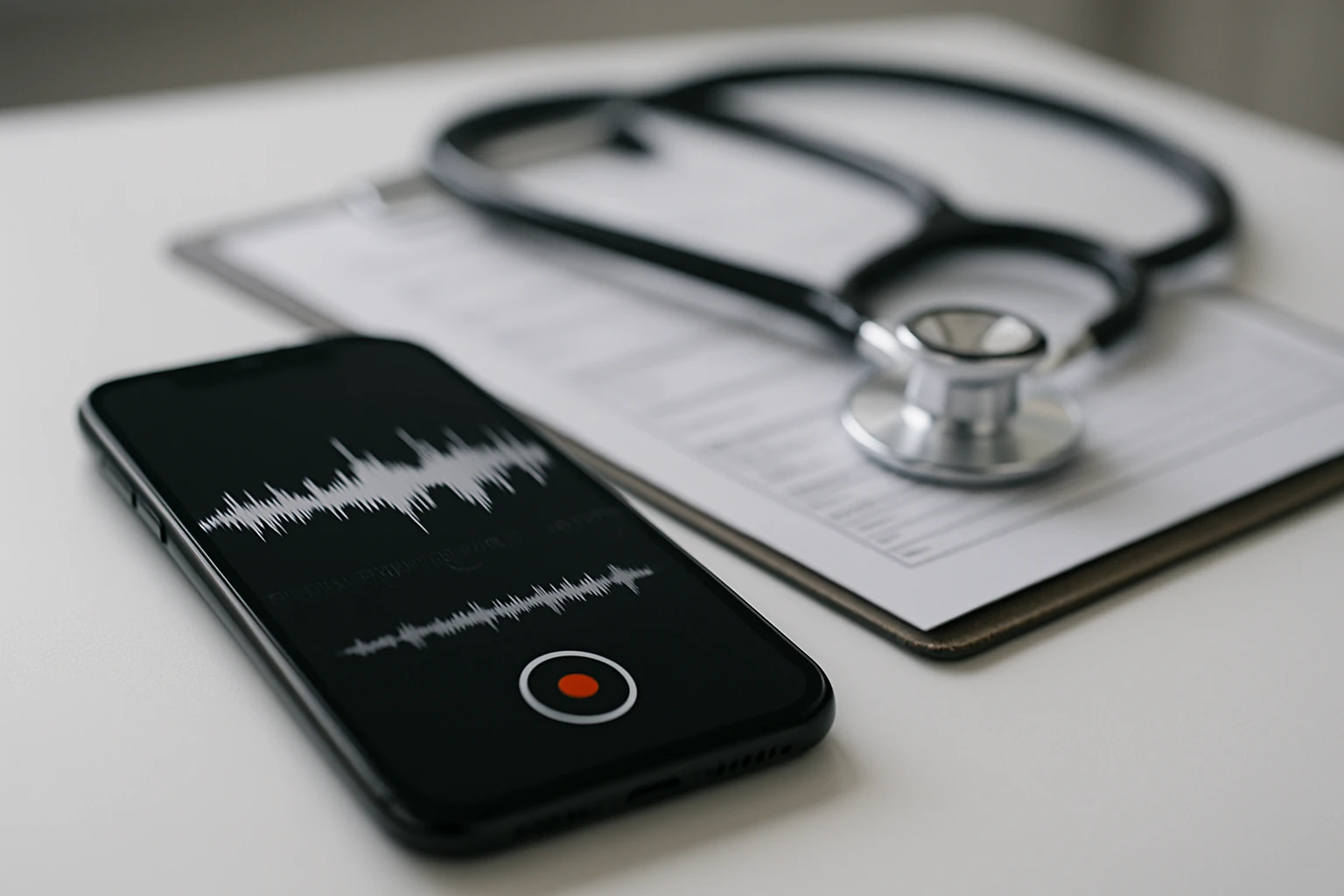
A close-up of a smartphone screen displaying an audio recording app, with a stethoscope and a medical chart lying on a clean, white examination table in the background.
Conclusion
As we’ve explored, understanding whether you can record your doctor’s visit involves various legal, ethical, and practical considerations. It’s essential to be informed about the specific state laws applicable to recordings in medical settings, as they can widely differ across the United States. Ensuring clear communication with your healthcare provider about your intentions is equally crucial, fostering a mutual understanding and maintaining trust. According to data from a 2019 study sponsored by The BMJ, utilizing recordings can enhance patient recall and satisfaction, especially when consent and privacy concerns are adequately addressed. More details on this can be found at the BMJ website.
Practically, making a recording can empower you to revisit complex medical discussions and share them with family members or caretakers who need to be involved in your medical journey. Modern solutions, such as smartphone recording apps, make this process convenient and unobtrusive. However, securing these recordings is vital to prevent unauthorized access, ensuring that sensitive information remains protected according to HIPAA guidelines. For those aiming to optimize this practice, digital health platforms offer comprehensive support in managing healthcare interactions more effectively.
Looking ahead, as awareness and technology evolve, the notion of recording clinical visits may become more integrated into routine medical practice. Patients should leverage these resources thoughtfully, prioritizing a respectful and legal approach. By embedding this practice into your healthcare routine, you can take an active role in managing your health, enriching your understanding, and enhancing collaborative decision-making with your doctor.
Ready to take the next step? Consider utilizing professional resources such as Beek Health for expert guidance and solutions tailored to your healthcare needs. Embracing these strategies will not only enhance your engagement but also optimize your overall healthcare experience.